


1Introduction
Cultural heritage constitutes a shared legacy of outstanding universal value, a precious non-renewable resource passed down from human ancestors to future generations[1]. Beyond preserving tangible and intangible legacy, its significance lies in enabling contemporary societies to revisit and interpret the socio-historical landscapes of bygone eras. Against the backdrop of global digital transformation, memory institutions such as digital libraries, archives, and museums have spearheaded cultural heritage digitization. This process encompasses digital collection, processing, storage, and presentation[2]. Consequently, it facilitates a paradigmatic shift from heritage "preservation" to "utilization." However, activating complex cultural heritage characterized by multifaceted resources and intertwined historical events remains a formidable challenge in heritage management[3][4]. A striking example is the "Beijing Central Axis: A Building Ensemble Exhibiting the Ideal Order of the Chinese Capital," inscribed on the UNESCO World Heritage List at the 46th World Heritage Committee Session in 2024. With a history that spans seven centuries, this 7.8-kilometer linear heritage stretches from the Bell and Drum Towers in the north to the Yongding Gate in the south, comprising 15 major elements, including iconic landmarks such as the Forbidden City, the Tiananmen Square, the Zhengyang Gate, and the Temple of Heaven. Within this linear ensemble coexist diverse tangible and intangible sub-elements: cultural relics, documents, paintings, landscapes, inscriptions, folk customs, historical events, dramas, legends, and cultural practices, forming a complex network of multi-source heterogeneous resources.
Antiquities were not destroyed for the salvage of ancient fragments, but to bring an exemplary past back to life[5]. In recent years, research on the Beijing Central Axis has remained focused on historical changes[6], historical landscapes[7], heritage value assessment[8], and urban planning[9], with few digital solutions and practices. Among these, there are some exceptions, such as the digital AR display of individual buildings like the Drum Tower[10], which exemplify the application and preservation of modern technology in cultural heritage. However, at the overall level of the Central Axis, only the Beijing Municipal Institute of Surveying and Mapping has conducted ultra-fine-scale surveying and 3D modeling of various heritage elements along the Central Axis, accurately replicating it and establishing a digital twin of the Central Axis[11]. Yet, terminal virtual spatial data alone cannot fully record and preserve the memory of the Central Axis, nor can it establish connections among these data. The functions, history, and values of the buildings are all overlooked. To address this complexity, methodologies including metadata standards, ontologies, semantic webs, knowledge graphs, and linked data offer systematic approaches to organizing, connecting, reconstructing, and presenting heterogeneous heritage resources, such as people, places, times, events, and objects[12]. These methodologies enable users to explore cultural heritage more intuitively and comprehensively by establishing semantic relationships between data types, thereby revealing otherwise obscured historical contexts and cultural connotations. Berry emphasized the necessity of reorganizing and presenting cultural heritage through accessible and engaging digital formats to enhance public engagement[13]. Spatial narrative theory—an emerging framework derived from narratology within the spatial dimension—emphasizes the significance of locations, their narrative contexts, and interconnections with other elements[14]. This theoretical perspective provides a valuable epistemological and methodological foundation for navigating the fragmented, randomly accessible data associated with the Beijing Central Axis.
Building on spatial narrative theory, this study constructs a domain ontology tailored to the Central Axis, standardizing the semantic representation of its diverse cultural heritage elements and their relationships. By integrating multi-source, heterogeneous data into a coherent structure using Neo4j database technology, this research aims to generate meaningful knowledge associations, facilitate knowledge discovery, and deepen understanding of the historical, architectural, and cultural dimensions of this iconic linear heritage site.
2Literature Review
The cultural heritage ontology model has emerged as a core tool for integrating heterogeneous data and enhancing semantic interoperability, with substantial advancements in digital heritage research. Scholars have leveraged ontology models to connect cultural heritage assets with related historical contexts, personal narratives, and knowledge elements, thereby deepening both public engagement and academic inquiry. Cheng[15]proposed that visualizing knowledge concepts and their interrelationships significantly improves the accessibility and comprehensibility of cultural heritage resources. Expanding on this, Hyvönen[16]emphasized that ontology infrastructure serves as the foundational support for developing cultural heritage data resources, facilitating knowledge sharing within the field, and addressing high-level semantic interoperability challenges.
In the domain of narrative theory-driven ontology construction, scholars have explored innovative approaches to enrich heritage representation. Mulholland[17]introduced the "curatorial narrative" method, advocating for the adoption of narrative techniques from literature and cinema to construct a "storytelling" framework for cultural heritage. This approach breaks free from the constraints of traditional metadata-centric models, enabling more engaging and context-rich heritage interpretation. Complementing this, Chen[18]developed an ontology model for ancient Chinese architecture from an architectural theory perspective, with a specific focus on articulating cultural connotations and construction processes, thereby bridging technical representation with cultural meaning.
On the application front, digital exploration of urban cultural heritage has advanced through diverse methodological pathways. BAI[19]took Nanjing as a case study, integrating documentary maps and remote sensing data to reveal patterns in urban form expansion specifically northward spatial growth and the evolution of functional zoning over time. Similarly, YAN[20]employed ArcGIS software to analyze geographical data of ancient cities in the Central Plains region, visualizing diachronic changes in urban quantity, scale, and gravitational center distribution. Large-scale projects have demonstrated the potential of multi-source data integration: the Rome Reborn project[21]achieved dynamic restoration of ancient Roman architectural facades through cross-data synthesis, while the Venice Time Machine[22]constructed longitudinal digital scenarios based on manuscripts and architectural archives, enabling temporal comparisons of architectural clusters. These practices collectively illustrate how virtual reconstruction technologies can transcend static display limitations, offering immersive historical experiences that enhance understanding of heritage evolution.
3Spatial Narratology
Narrative has long been a fundamental aspect of human civilization, manifesting in diverse forms such as nursery rhymes, historical accounts, comic strips, and films. Narratology emerged in 1969 with the publication of Grammaire du Décaméron (The Grammar of the Decameron)[23]. However, early narratology focused primarily on fictional literature, neglecting historical, biographical, and visual elements and severing connections with social, historical, and cultural contexts.
To address these limitations, narrative studies expanded beyond literary analysis, integrating with fields such as history, art, philosophy, and psychology, leading to the "narrative turn"[24]. Spatial narratology, in particular, evolved from fragmented early conceptions. Henry James used spatial objects to construct narrative settings, while Joseph Frank argued that modern literature replaces temporal sequence with spatiality through techniques like juxtaposition and symbolism[25]. Gabriel Zoran further developed spatial narratology by dividing narrative space into three levels: geo space (formal space), chronotopic space (spatial relationships of events), and textual space (variations in meaning due to language and perspective)[26].
Chatman later categorized narrative space into "story space" and "discourse space"[27]. Despite these advancements, these models still focused mainly on novels. The "spatial turn" in the late 20th century further complicated the concept of space, defining it as multidimensional and intertwined with history, culture, politics, and other factors[28]. Henri Lefebvre proposed multiple spatial concepts, such as social space and urban space, emphasizing that space is a nexus of multiple factors involved in narrative[29].
4Ontology Modeling of the Beijing Central Axis Cultural Heritage within the Spatial-Narrative Theory
4.1Reuse of Ontologies and Data Sources
This study employs a spatial narratology model to reconstruct the context of the Beijing Central Axis, integrating temporal and spatial dimensions. The ontology model, following FAIR principles and described in OWL, integrates CIDOC-CRM(Conceptual Reference Model) for standardized descriptions, DCMI(Dublin Core Metadata Initiative)for metadata attributes, and CDWA(Categories for the Description of Works of Art)for detailed artistic portrayals. To address gaps in describing Chinese architecture and the Central Axis context, we introduce MFAB(Metadata for Archaic Buildings)for technical architectural descriptions, PM(Metadata System of Paintings in the Palace Museum Collection)for visual symbols, and BCA(Beijing Central Axis Custom Vocabulary)for custom vocabulary on the Central Axis. Entities and terms were annotated and mapped to controlled vocabularies in databases like CBDB to enhance data quality. Data sources include approximately 600,000 words of textual data obtained through web scraping from the official Beijing Central Axis website and Wikipedia pages, and through OCR digitization of modern books (Beijing Central Axis Chronicles, Beijing Central Axis) and ancient records (Imperially Approved Records of the Capital, volumes 9-42).
4.2Designing the Ontology Dimensions of the Beijing Central Axis Cultural Heritage within the Spatial-Narrative Theory
Existing research lacks a comprehensive and well-defined metadata description framework for the Beijing Central Axis. Therefore, this study first constructs a traditional descriptive framework to cover relevant metadata information. Subsequently, based on the spatial narratology structure discussed earlier, the ontology is categorized into three dimensions according to the nature of the data: Geo Narrative Space, Historical Narrative Space, and Cultural Narrative Space.
4.2.1Metadata Model
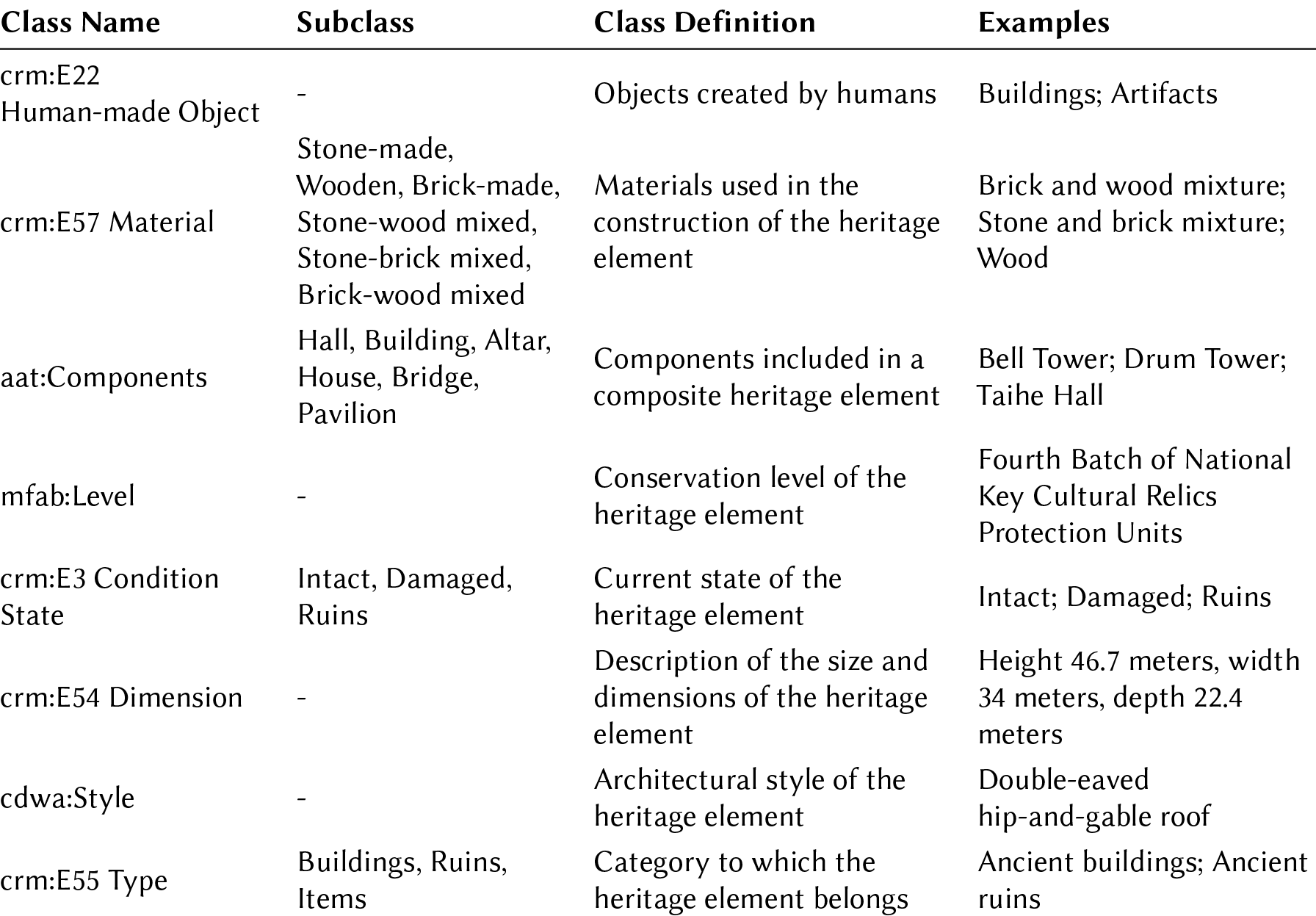
Generally, the extraction of basic metadata for cultural relics typically includes elements such as name, alias, conservation level, and artifact number. The unique aspect of the Central Axis lies in its numerous buildings, which cannot be fully captured directly and require further refinement into sub-concepts. The reused and custom-defined categories (prefixed with "bca") are shown in Table A.1in the appendix, and the metadata sub-ontology model containing attribute information is illustrated in Figure 1.

4.2.2Geo Narrative Model
History without geography is like a building without a foundation[30]. The spatial characteristics of narrative elements, such as the orientation, distance, relative positions on the central axis, and absolute latitude and longitude coordinates of buildings along a central axis, are all worth documenting. Before formal narration, the geographical information of objects is crucial as a narrative background.
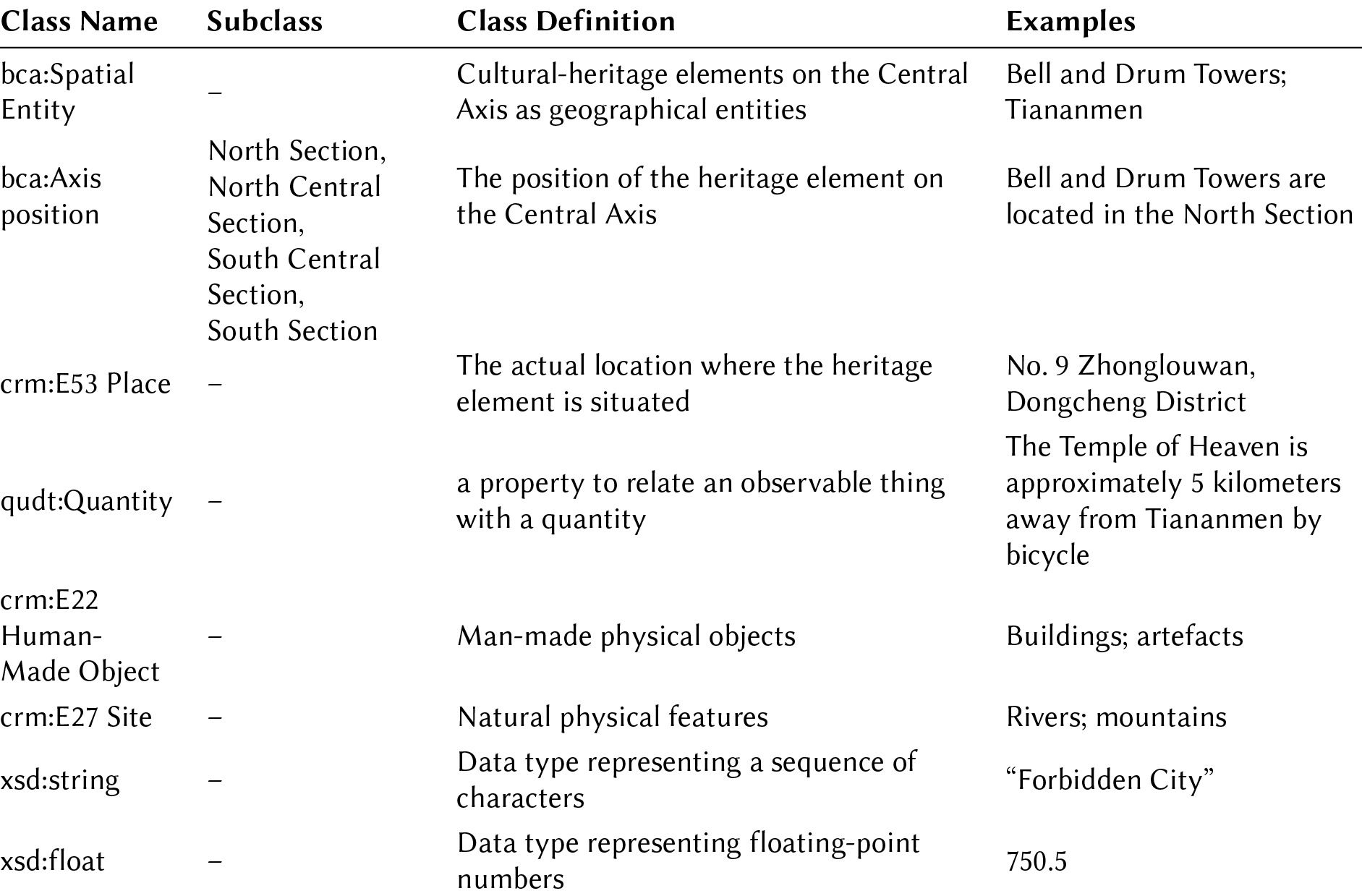
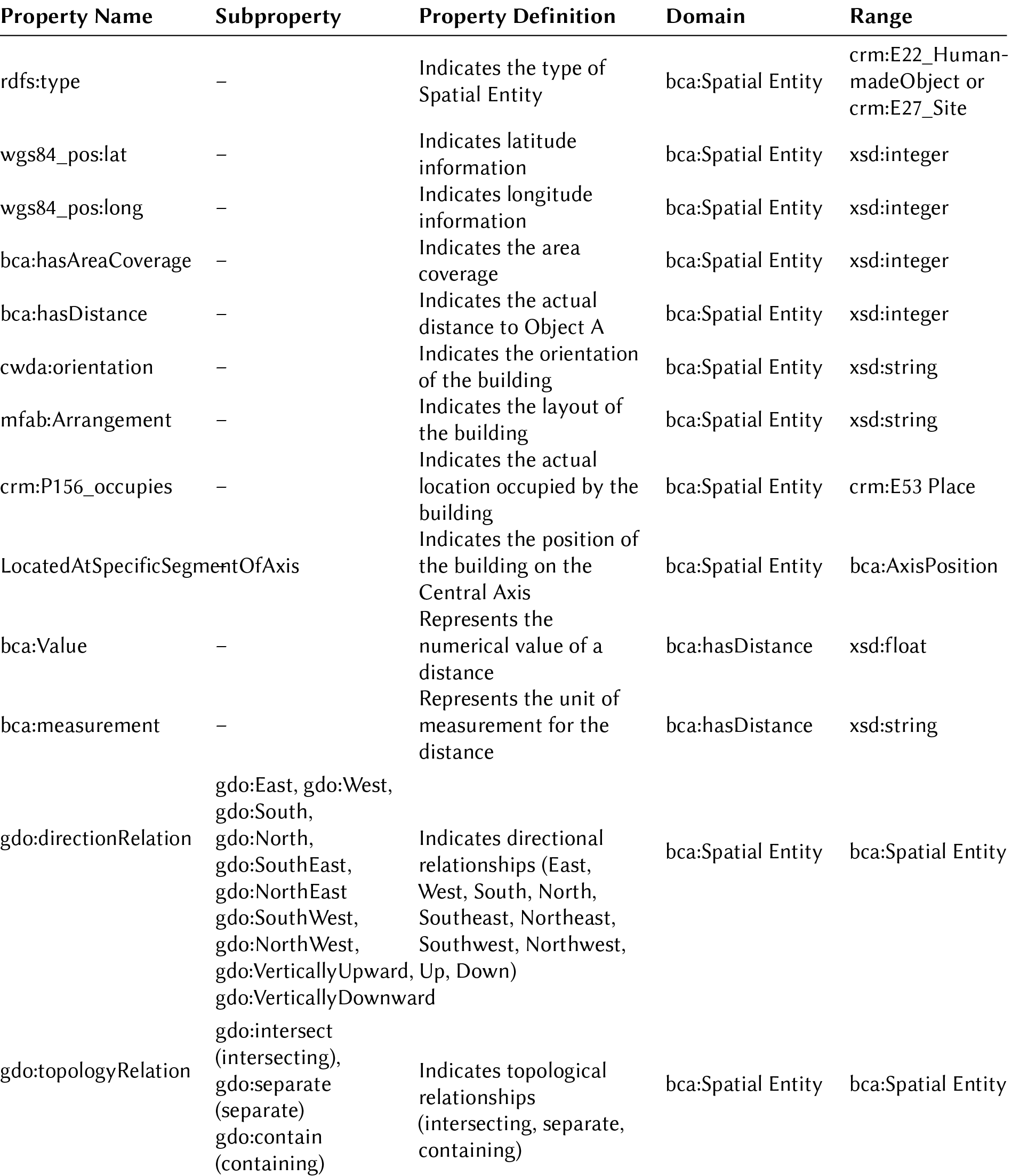
Therefore, the study adopts the “Geo” constructed by Zonan in the previous text as the primary narrative space. This paper defines a spatial entity class (bca:Spatial Entity), which has spatial location properties, geometric properties, and spatial relationships such as topology, orientation, and distance. The topological and directional relationships are reused from the topology relation and direction relation classes in the GeoDataOnt ontology (prefix gdo), while the results of the distance relationships are represented by xsd:integer. Since these classes and attributes are relatively complex, they are organized into Table A.2 and A.3. The combined geospatial sub-ontology model is shown in Figure 2.
4.2.3Historical Narrative Model
Long Diyong posits that the "spatiality" of historical narratives is not merely reflected in geographical spaces where human activities occur; it also manifests in multiple aspects such as historical evidence, narrative motives, and the structure of history. Therefore, this study adopts Long Diyong's "spatial foundation of historical narrative" as the historical narrative space.
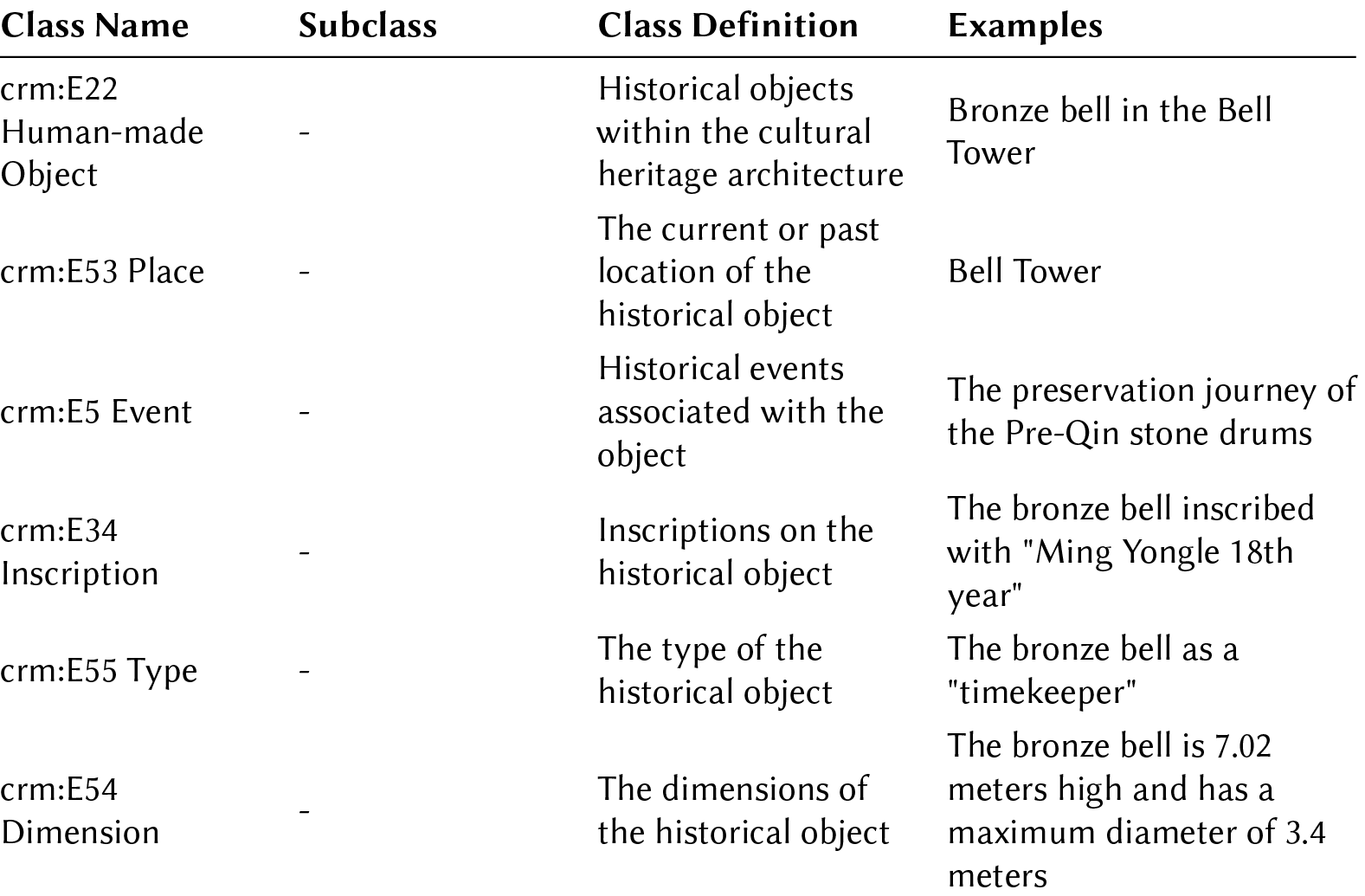
- Motives of Historical Narratives: In literary creation, some element that touches the heart is needed to provide the motive for writing. The fictional nature of literature means that almost anything in social life—people, events, or objects—can trigger the motive for narrative. In the historical narrative of the central axis, the creation of buildings also requires motives. For instance, the construction of the Bell and Drum Towers was motivated by the need for city-wide timekeeping and time-announcing functions. Therefore, elements related to motives are included, such as the creators of the Bell and Drum Towers, reasons for their location and naming, and the time of construction.
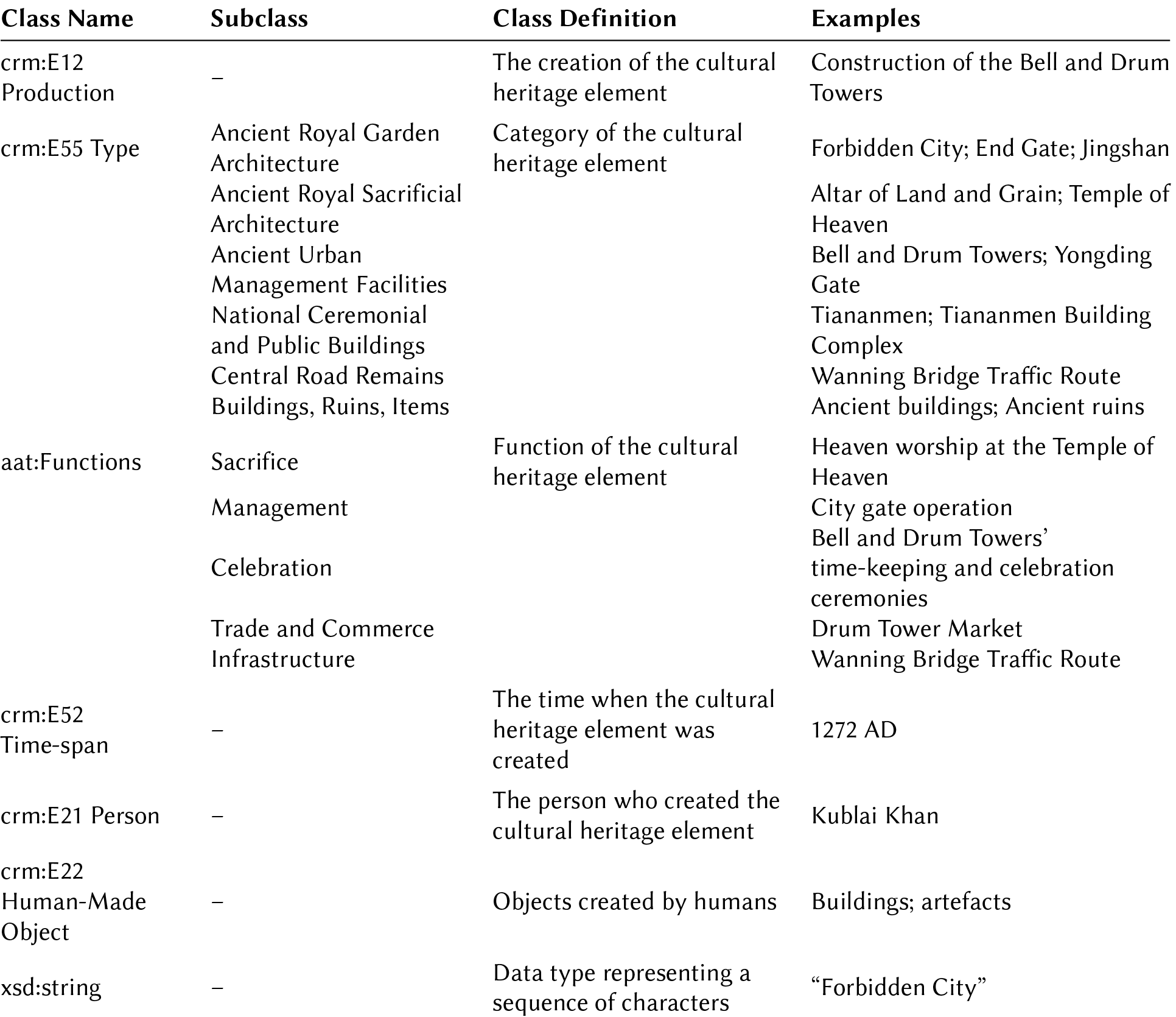
- Evidence of Historical Narratives: Ancient relics, such as ruins, artifacts, and documents, sometimes serve as evidence for certain historical facts, and at other times, they may alter legends that have long been considered factual. Like archaeologists who study ancient artifacts, researchers not only focus on written documents but also examine coins, inscriptions, and steles to verify various aspects of the past and uncover the complete truth, since historical evidence cannot be altered by written records[31]. Buildings along the central axis and their internal objects, such as the Bell and Drum Towers and their copper bells and hour drums, record the people, architectural culture, social order, and political and ritual systems of the time. The motives and evidence of historical narratives are organized in Tables A.4 and A.5, and their sub-ontology models are shown in Figure 3.
- Places of Historical Narratives: All historical events occur in specific spaces and cannot be separated from particular locations. Spaces or places that bear various historical events, collective memories, and national identities become special landscapes and historical sites. When temporal and spatial elements, human actions, and events are combined, space becomes place. Therefore, when narrating, it is necessary to record the locations where events occurred, the people involved, the relationships between people and places, and changes in the locations. For example, regarding the Bell and Drum Towers, it is necessary to record events of their destruction and restoration, as well as people associated with these events.
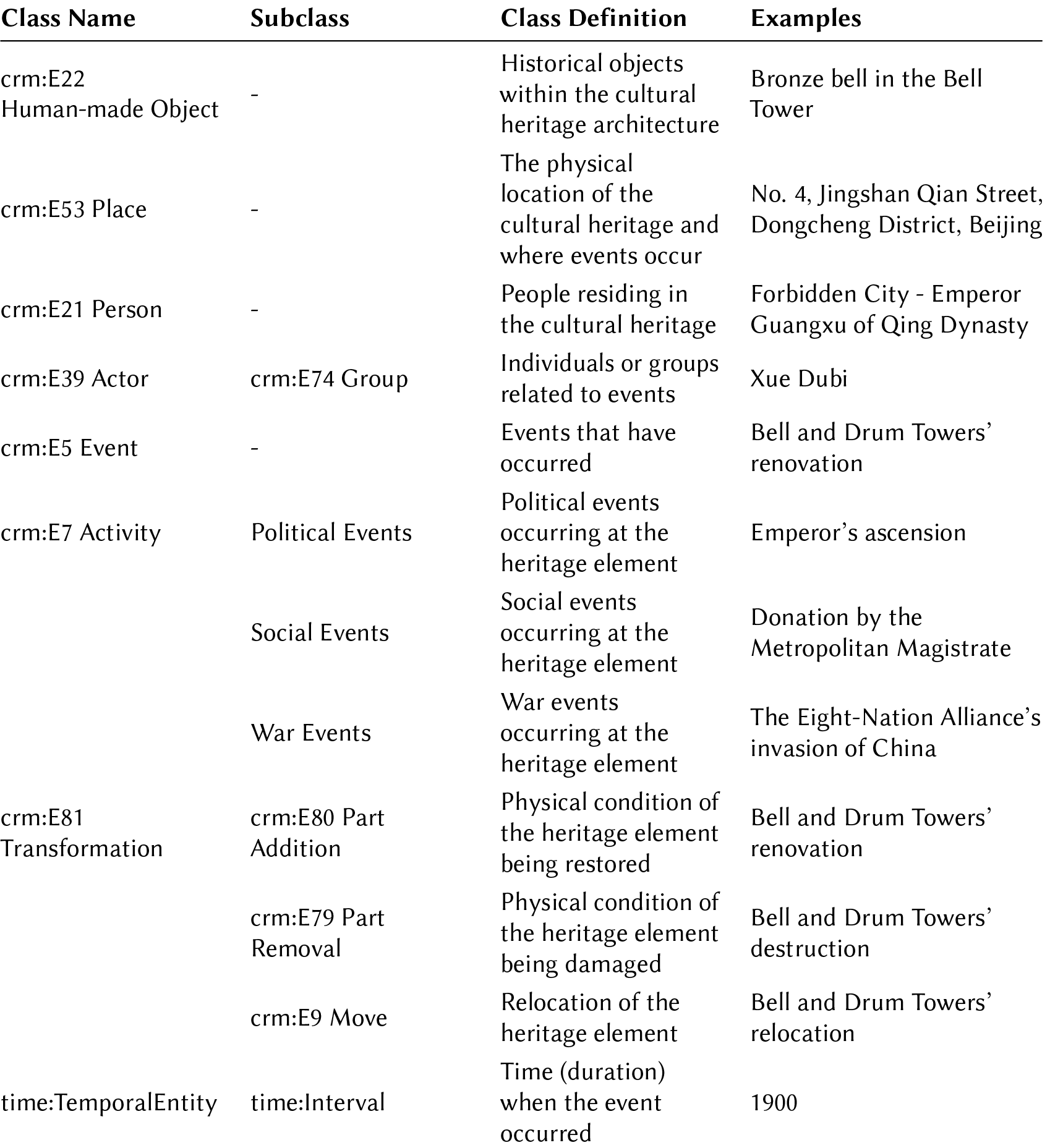
- Structure of Historical Narratives: A narrative structure of history should organize a series of events into a coherent framework, typically arranging them in a linear, cause-and-effect sequence based on chronological order. However, many events occur successively or concurrently without any necessary causal or logical connection. Merely connecting them in a timeline cannot reveal the essence of the facts. As a result, the "thematic juxtaposition" narrative form has emerged. This form involves presenting multiple sub-narratives in parallel to describe the same theme[32]. It is particularly applicable to the central axis, where individual buildings are narratively connected to form a complete cultural heritage that represents the "ideal urban order." The numerous related or unrelated events that occur within this macro-scale site constitute thematic juxtaposition. These events have various relationships. For example, the construction of the Bell Tower and Drum Tower is a precondition for their subsequent destruction, forming a hierarchical relationship. The construction of the Ming Dynasty Imperial City, which involved using the ruins of the old city and the silt from river dredging to create the present-day Jingshan Hill, demonstrates a causal relationship between these two construction events. This study defines the categories of events and the relationships between events (see Table A.6 and Figure 4).
4.2.4Cultural Narrative Model
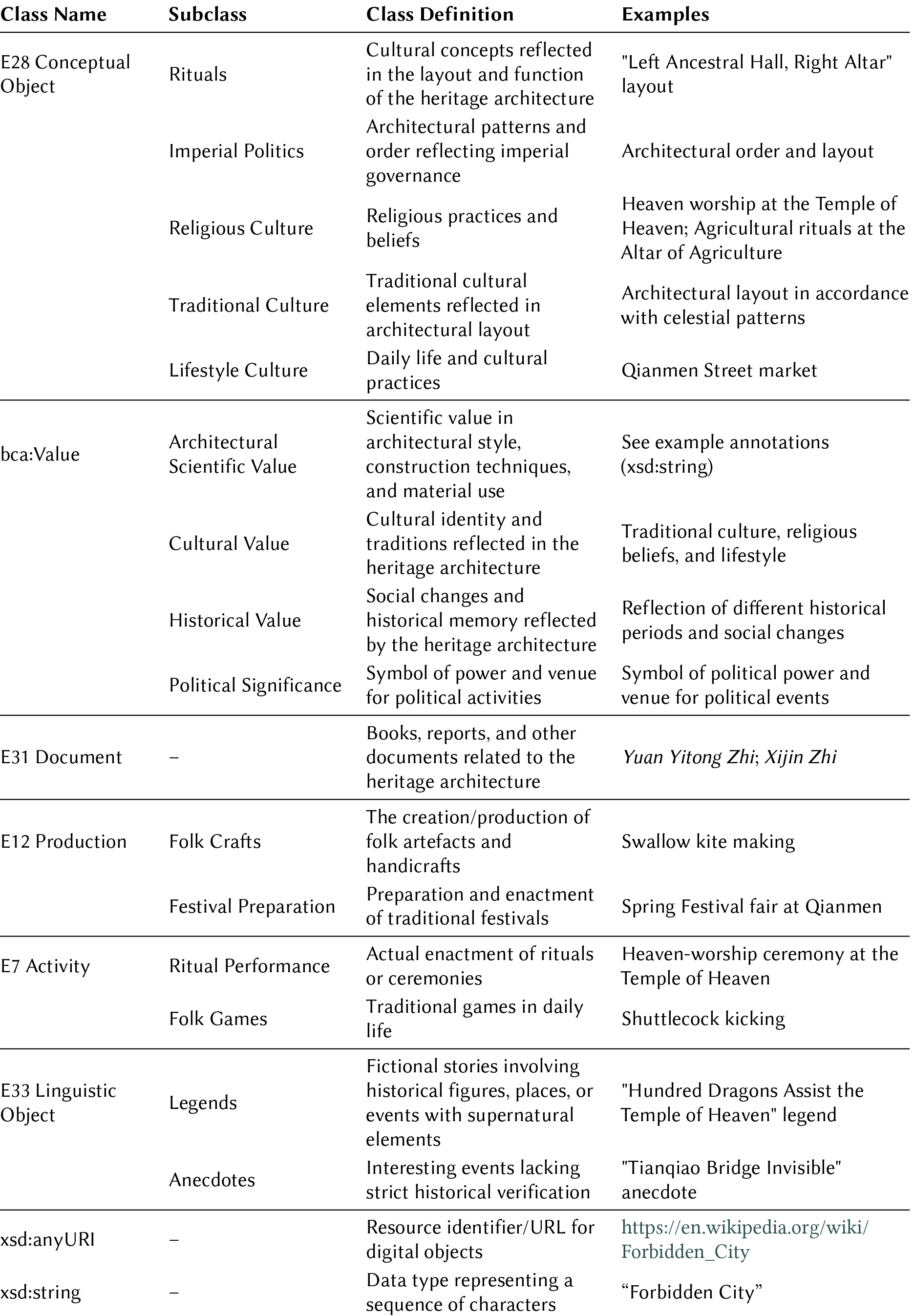
The cultural narrative space is a construct defined in this study, primarily focusing on the characteristic elements of the cultural heritage along the central axis. Firstly, it encompasses the cultural concepts expressed by the architecture. For example, the time-keeping and time-announcing functions of the Bell and Drum Towers reflect the urban management system, while the sacrificial function of the Temple of Heaven embodies the concept of ancestor worship. Additionally, the architectural, cultural, and historical values of these buildings are crucial pieces of information. Lastly, whether there are relevant documentary records and descriptions of the buildings, as well as the folklore, legends, and anecdotes associated with them, are also included in this narrative space. The overall classification system is shown in Table A.7, and the ontology is illustrated in Figure 5.
5Constructing the Spatial-Narrative Knowledge Graph of the Beijing Central Axis with Large Language Models
5.1Construction Method of the Beijing Central Axis Spatial-Narrative Knowledge Graph
Traditional instance creation methods, such as manually adding instances using the Protégé tool, are not suitable for large-scale applications due to their labor-intensive nature[33]. Neo4j, a graph database known for its scalability and versatility, has been widely adopted in the construction of domain -specific knowledge graphs. After verifying its feasibility, we can proceed to conduct entity and relation extraction experiments on the corpus of the Beijing Central Axis and store the results in Neo4j according to the schema defined earlier.
Regarding extraction methods, although the BERT model has demonstrated remarkable performance in natural language processing tasks, its effectiveness is highly dependent on the quality and diversity of the pre -trained data. In specific domains such as cultural heritage entity recognition and relation extraction, its applicability is somewhat limited. After fine -tuning BERT on annotated corpora for joint extraction, we found that the experimental results were not satisfactory for tasks involving numerous entities and complex relationships. In contrast, larger language models(LLMs) have recently gained widespread application across various fields due to their superior performance in complex knowledge extraction tasks[34]. Therefore, we employed the latest open-source LLMs, Qwen3-32B, which has shown the best performance on Chinese language tasks. The following methodological framework was adopted to ensure the alignment of multi-source data with the predefined ontology structure. The experimental process is shown in Figure 6 .
• Stage 1: Triple Extraction
Leveraging the heritage ontology model as a foundational framework, few-shot examples were constructed using the previously defined sub-ontology models and instance annotations. These examples were input into the Qwen3-32B LLMs to facilitate the extraction of triples from the target corpus, with simultaneous annotation of entity relationships and entity types. Despite advancements in LLMs-based information extraction, inevitable inaccuracies may arise during this process, such as erroneous relationship assignments or irrelevant entity category annotations.
• Stage 2: Dual Definition of Relationships and Entity Types
A dual-definition approach was employed: the Qwen3-32B model was utilized to autonomously define the extracted relationship types and entity categories, while domain experts manually established standardized definitions within the schema framework to ensure terminological consistency and conceptual precision.
• Stage 3: Semantic Similarity Computation
The Qwen3-embedding-0.6B model—a lightweight embedding tool—was deployed to compute vector similarities between the LLMs-generated definitions and the schema-defined standards. This step yielded the top 5 most semantically similar relationship and entity type pairs, providing a narrowed set of candidates for further validation.
• Stage 4: Semantic Matching and Knowledge Refinement
The top 5 similarity results, along with their contextual corpus, were fed back to the Qwen3-32B model to enable semantic judgment. The LLMs was tasked with identifying the optimal matches between extracted elements and predefined schema definitions, replacing non-conforming relationships and entity types with standardized counterparts. Following this refinement, triple sets derived from different sub-ontology models underwent entity fusion and relationship fusion to resolve redundancies and inconsistencies. The integrated triples were then stored in a Neo4j graph database, resulting in a structured knowledge graph that conforms to the predefined ontology architecture.
5.2Evaluation Method of Spatial-Narrative Knowledge Graph for Beijing's Central Axis
We have designed an evaluation method tailored for assessing the construction of knowledge graphs in the domain of cultural heritage. This method combines text normalization with fuzzy semantic matching to create a comprehensive evaluation system that balances precision and recall. The approach involves multi-stage text preprocessing for candidate and reference triples, incorporating the Levenshtein distance algorithm with an 80% similarity threshold. By calculating semantic similarity across the subject (S), relation (R), and object (O) dimensions, a flexible matching mechanism is established to address the unique challenges of name variations and inconsistent lengths in cultural heritage extraction by LLMs, while effectively avoiding the generation of hallucinated entities and relationships.
In this experiment, 5% of manually annotated data (a total of 13 triple sets) were selected as the reference standard for comparison with the LLM extraction results. As shown in Table 1, The evaluation metrics used were Precision, Recall, and F1-score for quantitative analysis. The results showed that the method achieved a precision of over 75.7% and an F1-score of 52.2%, demonstrating the feasibility of using LLMs with ontology schema to construct knowledge graphs in the cultural heritage domain. However, the Recall was only 41.8%. Manual comparison revealed that LLMs have significant shortcomings in recognizing complex entities and relationships, such as spatial orientation, event extraction, and event relationships, indicating room for improvement.
5.3Neo4j Implementation and Visualization
In Neo4j, nodes represent specific instances of classes defined in the ontology, with node labels corresponding to ontology classes, relationships corresponding to object properties, and attributes corresponding to data type properties. Based on the constructed ontology and extracted triples, we established the nodes, attributes, and relationships in the knowledge graph. The data was then batch-imported into Neo4j to form the knowledge graph of the Beijing Central Axis cultural heritage under the spatial narrative framework. The resulting graph consists of 5,568 nodes and 6,114 relationships. Figure B.1 provides an interface example of the Temple of Heaven within the knowledge graph. The central nodes in this section represent the main architectural components of the Temple of Heaven and their associated information. Figure B.2 displays information about the Beijing Bell Tower. Due to its relatively small scale as a single architectural entity, the extracted details are clearly visible in this section.By leveraging Neo4j’s capabilities, we have effectively visualized and structured the complex relationships and attributes of the cultural heritage sites along the Beijing Central Axis, facilitating a comprehensive understanding of their spatial and cultural narratives.
6Acknowledgments
This study was supported by the National Social Science Fund of China under Grant Number 24BTQ035.
ADetailed Tables of Ontology Classes and Relationships
The detailed tables of ontology classes and relationships are provided in the Appendix.
BDetailed Figures of Implementation and Visualization in the Knowledge Graph
This appendix provides supplementary details regarding the implementation and visualization of the knowledge graph using Neo4j.
 Described in Dublin Core